Why is my toilet running constantly and how to fix it
A constantly running toilet is almost always a worn flapper, stuck fill valve, or misadjusted float. Here's how to diagnose and fix it in Weatherford, TX.
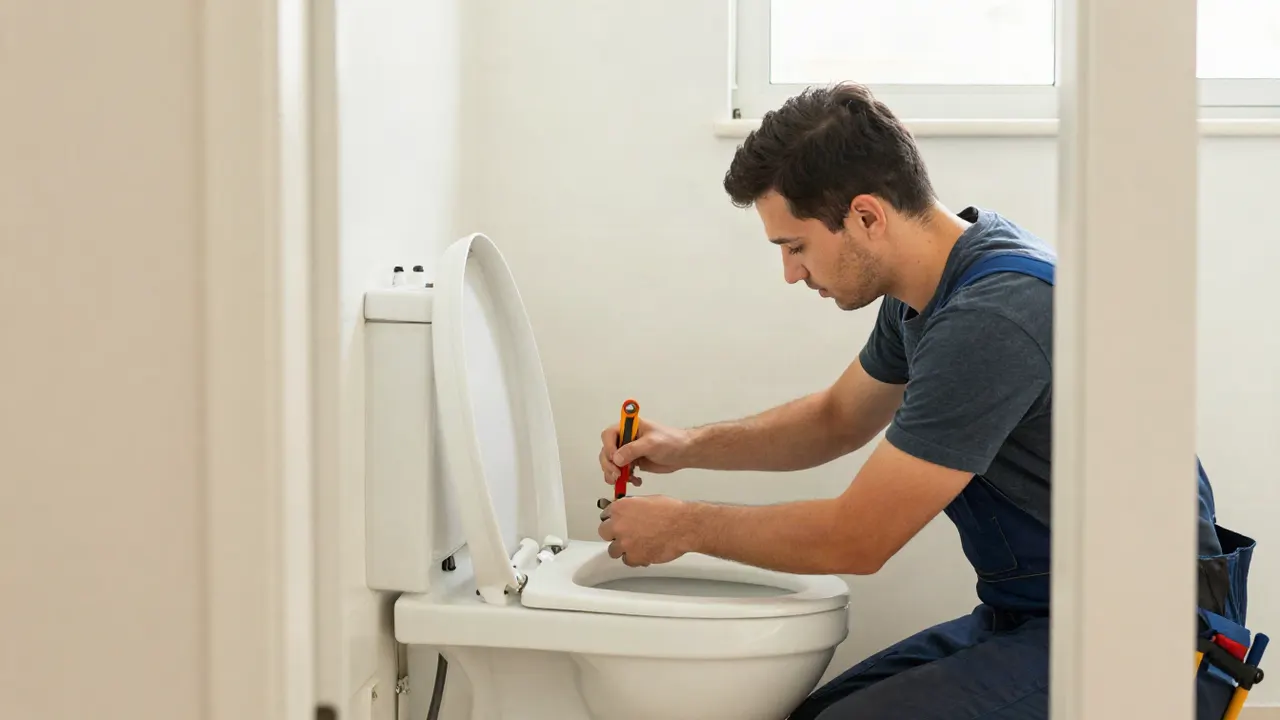
Your toilet is running constantly because the flapper is no longer sealing against the flush valve seat, or the fill valve is stuck open and letting water trickle into the bowl nonstop. Those two parts cause roughly 80% of running toilets we see in Weatherford, and both are inexpensive to replace. The rest of this post walks through how to confirm which part is failing, how to fix it yourself in under an hour, and when it makes more sense to call us instead.
A running toilet is not just an annoyance. In a typical Weatherford home on city water, a flapper that fails to seal can waste 200 gallons a day - that is 6,000 gallons a month disappearing down the drain and onto your bill. We have walked into houses off Santa Fe Drive where the homeowner had no idea the toilet was the culprit until the water statement arrived.
Why is my toilet running constantly in Weatherford TX?
A constantly running toilet in Weatherford TX is a mechanical failure inside the tank, not a problem with your water supply or the city main. The tank holds about 1.6 gallons on a standard model and 1.28 gallons on newer high-efficiency units. When the flapper, fill valve, or float stops doing its job, water keeps flowing from the supply line into the bowl and out through the drain - silently, 24 hours a day.
Hard water is the accelerant here. Weatherford municipal water runs moderately hard, and that mineral content eats rubber flappers faster than most homeowners expect. A flapper that would last five years on soft water often starts leaking in two or three. We replace more flappers in this city than any other single toilet part.
If you have already ruled out the obvious and the toilet keeps running after flush, the next step is figuring out which of the five common causes applies to your tank.
The five most common causes of a running toilet
Every running toilet we diagnose falls into one of five buckets. Here is how to tell them apart without pulling the tank apart.
1. Worn or warped flapper
The flapper is the rubber seal that drops back onto the flush valve after you flush. Over time it warps, cracks, or develops a mineral crust that prevents a tight seal. Water then seeps from the tank into the bowl continuously. This is the number one cause and the cheapest to fix.
2. Stuck or failing fill valve
The fill valve refills the tank after a flush. When the internal diaphragm wears out, the valve never fully shuts off, and you hear a constant hiss or trickle. A fill valve that has been in service more than eight years is a candidate for replacement even if it still works.
3. Float set too high or out of adjustment
If the float sits too high, water rises past the overflow tube and drains straight into the bowl. You will see water level at or above the top of the overflow tube. A quarter-turn on the adjustment screw usually fixes it.
4. Faulty flush valve seat
The flush valve seat is the plastic or brass rim the flapper rests against. If it is nicked, corroded, or coated in mineral scale, even a brand-new flapper will not seal. This one requires either resurfacing or replacing the entire flush valve assembly.
5. Leaking tank-to-bowl gasket
The gasket between the tank and bowl can fail with age. Water drips from the tank directly into the bowl, bypassing the flapper entirely. You will usually see moisture or mineral staining around the tank bolts.
How to fix a constantly running toilet
Fixing a running toilet in Weatherford takes 20 to 45 minutes with basic tools and a parts kit that costs $15 to $30 at any hardware store. Here is the sequence we use.
- Shut off the water. Turn the angle stop behind the toilet clockwise until it stops. Flush once to drain the tank.
- Identify the failure. Add a few drops of food coloring to the tank water. Wait 10 minutes without flushing. If color appears in the bowl, the flapper or flush valve seat is leaking.
- Replace the flapper. Unhook the old flapper from the overflow tube, take it to the store to match size, and clip the new one on. This alone solves most cases.
- Replace the fill valve if needed. If the hissing continues after a new flapper, swap the fill valve. Kits include new seals and a new float.
- Adjust the water level. Set the float so water sits about one inch below the top of the overflow tube.
- Turn the water back on and test. Flush three times, watch for leaks at the tank bolts, and confirm the water stops running within 30 seconds of each flush.
If the toilet is older than 15 years and you are already replacing the flapper and fill valve, it is worth pricing a new unit. A high-efficiency toilet uses 1.28 gallons per flush versus 3.5 on a pre-1994 model, which adds up fast on a Weatherford water bill. Our toilet installation Weatherford TX service covers removal, disposal, and full setup in a single visit.
How much does it cost to fix a running toilet in Weatherford?
Typical 2026 pricing in Weatherford runs $125 to $225 for a professional running toilet repair, including parts and labor. A simple flapper swap sits at the low end. A full fill valve and flapper replacement with flush valve inspection lands closer to $200. If the flush valve seat itself needs replacing, expect $250 to $350.
DIY parts cost is $15 to $30 for a basic kit and $40 to $60 for a full rebuild kit with a new flush valve. The trade-off is your time and the risk of a mis-seated gasket that turns a slow leak into a puddle on the bathroom floor.
For comparison, ignoring the problem costs far more. At Weatherford's current water rates, a moderate running toilet adds $40 to $90 per month to a residential bill. Over a year, that is $500 to $1,000 - several times the cost of the repair.
Can a running toilet increase my water bill in Weatherford?
Yes - a running toilet is one of the fastest ways to spike a residential water bill in Weatherford. A flapper that fails to seal fully can waste 200 gallons per day. A fully stuck fill valve can push 500 gallons per day or more.
To put that in perspective: the average Weatherford household uses about 300 gallons per day total. One running toilet can double your usage without any change in habits. If your last statement jumped by 30% or more and nothing else changed, check the toilets first.
If you have confirmed the toilet is not the source but the bill is still high, the next suspect is a hidden leak. Our leak detection and repair Weatherford TX service uses acoustic and pressure testing to find slab leaks, irrigation line breaks, and pinhole pipe failures before they do structural damage.
Common mistakes to avoid when fixing a running toilet
We get called to redo a lot of DIY toilet repairs. These are the mistakes we see most often.
- Replacing the flapper without checking the seat. A new flapper on a scaled or nicked seat will leak within weeks. Run a finger around the seat - if it feels rough, the seat needs attention.
- Over-tightening the tank bolts. Hand-tight plus a quarter turn is enough. Cranking them down cracks the porcelain and turns a $20 fix into a $400 toilet replacement.
- Setting the float too high. Water should sit one inch below the overflow tube. Higher than that and you are flushing money every cycle.
- Using the wrong flapper size. Flappers are not universal. Bring the old one to the store or match the brand and model stamped inside the tank lid.
- Ignoring a corroded supply line. If the angle stop or supply line is brittle, replacing it while you are already in there saves a flood later.
One more note specific to this area: if your home was built before 1990 and still has the original brass fill valve, the whole assembly is due. We see this constantly in older neighborhoods around residential plumbing Weatherford TX service calls, where the original fixtures have simply reached end of life.
When to call a professional
Call a professional if the toilet keeps running after you have replaced the flapper and fill valve, if water is pooling around the base of the toilet, or if you see corrosion or cracking on the tank itself. Those point to a flush valve or gasket failure that requires pulling the tank - a job that is easy to get wrong and expensive to fix twice.
We also recommend calling us if the toilet is more than 15 years old and this is the second or third repair in two years. At that point you are paying to keep a failing fixture alive. Our toilet repair Weatherford TX team can tell you in one visit whether a repair or replacement makes more sense for your setup.
Weatherford Parker Ridge Plumbing handles running toilet repairs across the city, from the historic homes near the downtown square to newer builds out toward Ric Williamson Memorial Highway. We carry common flappers and fill valves on every truck, so most jobs are done in one trip.
Frequently Asked Questions
Why does my toilet keep running in Weatherford TX?
In Weatherford, the most common cause is a worn flapper, followed by a failing fill valve. Hard water accelerates rubber deterioration, so flappers here often fail in two to three years instead of five. A food-coloring test in the tank confirms a flapper leak in about 10 minutes.
How do I fix a constantly running toilet?
Shut off the angle stop, drain the tank, and replace the flapper first - that solves most cases for under $20 in parts. If the hissing continues, replace the fill valve and set the float so water sits one inch below the overflow tube. Total time is 20 to 45 minutes.
How much does it cost to fix a running toilet in Weatherford?
Professional repair runs $125 to $225 in 2026 for a standard flapper and fill valve job. Flush valve seat replacement pushes it to $250 to $350. DIY parts cost $15 to $60 depending on whether you buy a basic flapper or a full rebuild kit.
Can a running toilet increase my water bill in Weatherford?
Yes. A leaking flapper wastes about 200 gallons per day, which adds $40 to $90 per month to a typical Weatherford residential bill. A fully stuck fill valve can waste 500 gallons daily. Fixing it usually pays for itself within the first billing cycle.
How long can I leave a running toilet before it causes damage?
Weeks, not months. Beyond the water bill, a constant trickle stresses the fill valve, wears the flapper further, and can eventually overflow if the float fails. Address it within a few days of noticing the sound.
Get help with plumbing in Weatherford
If your toilet is running and you would rather not spend your Saturday on your knees behind the tank, we can have it fixed today. Weatherford Parker Ridge Plumbing handles running toilet repairs, flapper replacements, and full toilet rebuilds across the city.
Call us at (682) 846-2111 and we will get a technician out to stop the waste and get your water bill back to normal.